
Physical therapy › Children
Pediatric physical therapyPediatric physical therapy
Development through movement, from the first months of life
Pediatric physical therapy is a specialized branch of medical rehabilitation for infants, children and adolescents with motor development delays, posture disorders, neurological or orthopedic conditions, or other movement difficulties.
A child is not a miniature adult. Their body is in continuous growth and development, and therapy must be adapted to each age stage.

What are the goals of pediatric physical therapy?
Depending on the child’s needs, physical therapy aims to:
- Stimulate harmonious motor development.
- Improve head and trunk control.
- Develop balance and coordination.
- Facilitate age-specific motor milestones.
- Improve postural control.
- Prevent contractures and musculoskeletal deformities.
- Develop autonomy in daily activities.
- Increase participation in play, school and recreational activities.
When is pediatric physical therapy recommended?
Physical therapy can be part of the recovery plan in situations such as:
In infants
- Congenital muscular torticollis.
- Postural and motor asymmetries.
- Delays in motor milestones.
- Muscle tone disorders.
- Certain neurological or neuromuscular conditions.
In children and adolescents
- Scoliosis and other spinal alignment changes.
- Posture disorders.
- Orthopedic conditions.
- Coordination and balance disorders.
- Neurological conditions.
- Recovery after trauma or surgery.
How does a pediatric physical therapy session work?
The therapeutic program is adapted to the child’s age, development level and ability to cooperate.
In infants, intervention may include therapeutic positioning, facilitating movements and activities that stimulate motor control.
In older children, exercises are often integrated into play so recovery becomes motivating.
Parent involvement is essential. They receive recommendations to support motor development and continue suitable activities at home.
Early intervention, when indicated, can significantly contribute to functional skills and prevent complications.
Neuro paediatric physio · 10 sessions · 1.000 lei
Content reviewed by the Body Recovery Center medical team
Book the assessment
Every physical therapy program starts with the initial assessment.
- 1
Preparing at home
Coming to the clinic should be free of stress. For your first visit to go smoothly, please bring:
- Comfortable clothing: loose or sports clothes that allow a proper assessment of joint mobility.
- Clean shoes: stable, clean trainers that you put on only in the physiotherapy gym.
- Your medical file: discharge notes, medical letters, ultrasounds or CDs with recent MRI / CT scans.
- 2
The initial assessment
Any sound recovery starts with a detailed analysis of your body. In this first session (about 30 minutes), the therapist runs specific tests of mobility, muscle strength, flexibility and balance. There is nothing to worry about:
“It does not hurt — we only measure, with clinical precision, the point we start from.” - 3
The collaborative discussion
You are the one in control of your own body. After the tests we sit down and set the goals together: whether you want to leave chronic pain behind or return to the sports field. We explain every stage of your personalised plan, and the pace of work is adapted continuously to your feedback.
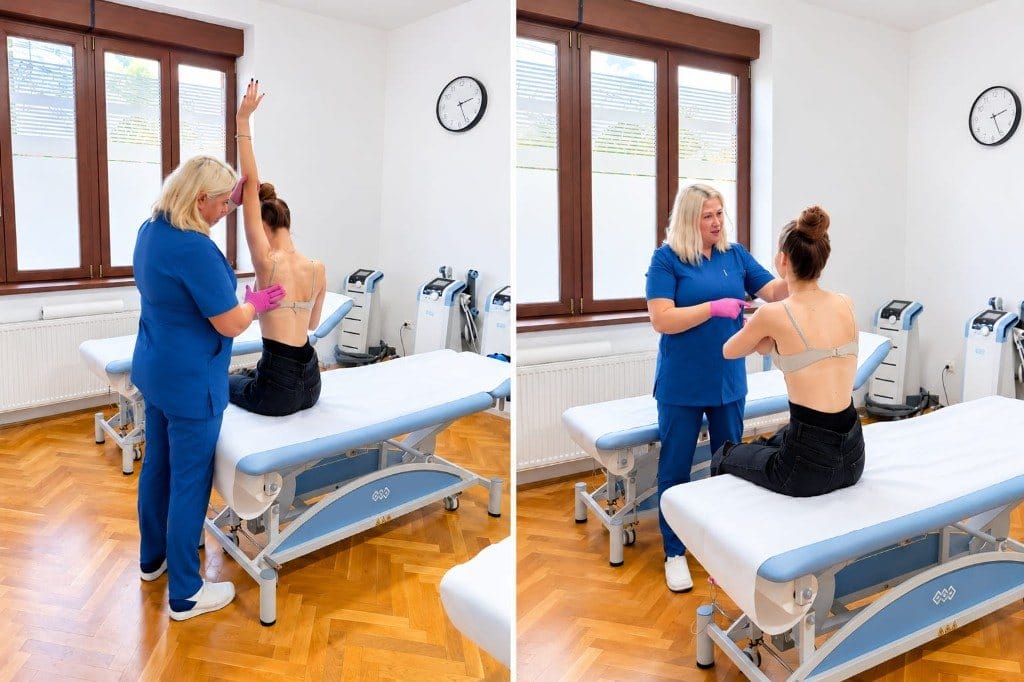
- 4
Your plan, booked from the start
At the end of the assessment you will not have to carry paper notes or handwritten recommendations. The therapist saves your plan directly in your digital file, and reception can open it immediately. When you reach reception, everything is already prepared: we choose together the days and times that work for you and we book in advance the specialists and devices needed for all your sessions.

Book the assessment
Choose the day and time for the initial assessment, or leave your number and we will call you.
Prefer us to call you?Leave your details and reception will contact you.
- 1
Preparing the file
When you handle logistics for a family member, organisation is the key. Before you set off, make sure you have prepared:
- Identity documents: your ID and the patient's ID.
- The full medical history: the medical letter, the hospital discharge note and, without fail, the imaging CDs (MRI/CT).
- Current treatment: a clear list with the name, times and exact doses of the medicines the patient takes now.
- 2
Your role in the clinic
Your presence is a huge support for us and an anchor of safety for the person you love. You become the patient's “voice” when they are too tired or cannot communicate well. If you are the legal representative (for example a parent or guardian), you will sign the administrative and GDPR agreements. In every situation our team keeps a direct, transparent conversation with you throughout treatment.
- 3
Shared goals
We know that recovering someone you love means, in fact, giving back independence in daily life. We do not aim only at abstract goals, but at concrete targets that matter at home:
“To be able to get out of bed alone.” · “To use cutlery again without help.” · “To climb the steps at the front door.” - 4
Simple logistics and booking the slot
For people with reduced mobility, every minute counts. Because we use a fully digital system, the recovery plan set by the therapist is saved directly in the patient file. So when you reach reception we do not waste time filling papers or copying recommendations. Our operator opens the file and sets the best session calendar on the spot, booking the hours in advance so you can organise specialised transport or the family schedule in time.
Book the assessment
Book the assessment for the person you care for, or leave your details and we will call you so we can plan the visit together.