
Conditions we treat › Neurology › Peripheral nerve syndromes
Peripheral nerve syndromes (damage to one or more nerves in the hands or feet)
Mononeuropathy means damage to a single peripheral nerve, in the hands or feet. Polyneuropathy means several nerves are affected.
Common causes
- Metabolic and endocrine: diabetes (the most common cause).
- Mechanical compression: disc herniations, tunnel syndromes (carpal, tarsal).
- Autoimmune and inflammatory diseases: Guillain-Barré syndrome, chronic inflammatory demyelinating polyneuropathy (CIDP), lupus, rheumatoid arthritis.
- Infections: shingles (herpes zoster), Lyme disease, HIV, hepatitis.
- Nutritional deficiencies and toxins: lack of vitamins B1, B6, B12, alcohol misuse, chemotherapy or heavy metals.
The main specific syndromes
- Carpal tunnel syndrome: the median nerve is compressed at the wrist (numbness and tingling in the fingers).
- Guillain-Barré syndrome: an acute autoimmune polyradiculoneuropathy, with muscle weakness that spreads upwards.
- Discogenic radiculopathy (sciatica): a spinal nerve root is compressed by a herniated disc.
- Brachial plexopathy: injury to or inflammation of the brachial plexus (affects the shoulder and arm).
How recovery unfolds
- Stage 1Reducing stiffness and contractures
- Stage 2Regaining functional movement
- Stage 3Adapting daily activities to any remaining limitations
General treatment goals
- Preventing contractures and shortening: through passive mobilisation and sustained stretching, to keep the joints mobile.
- Reducing pain and inflammation.
- Muscle re-education: assisted or active exercises for the weakened muscles, progressing to resistance exercises as strength returns.
- Coordination and balance training: essential in sensory neuropathies (when the patient can no longer feel their feet well). Biofeedback and proprioception exercises on unstable surfaces are used.
- Gait re-education: correcting walking problems (for example the “steppage gait” caused by peroneal nerve damage), using orthoses or walking aids if needed.
- Relearning daily tasks: basic activities (eating, dressing, writing) are practised again through occupational therapy techniques.
Goals are set at the initial assessment. Progress differs from one patient to another.
Content reviewed by the Body Recovery Center medical team
- 1
Preparing at home
Coming to the clinic should be free of stress. For your first visit to go smoothly, please bring:
- Comfortable clothing: loose or sports clothes that allow a proper assessment of joint mobility.
- Clean shoes: stable, clean trainers that you put on only in the physiotherapy gym.
- Your medical file: discharge notes, medical letters, ultrasounds or CDs with recent MRI / CT scans.
- 2
The initial assessment
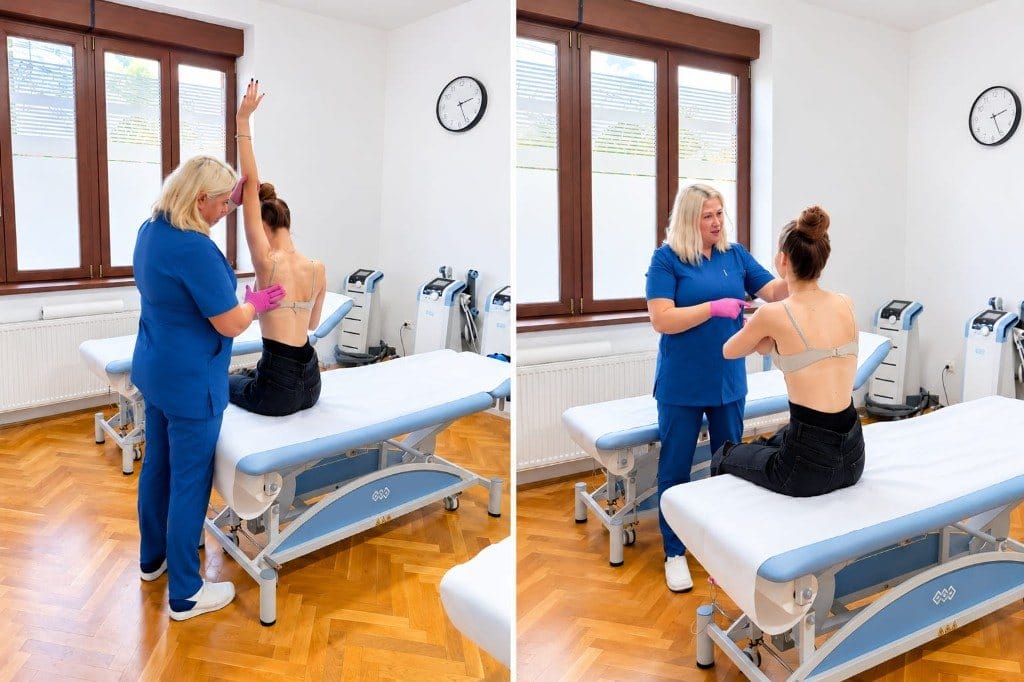
Any sound recovery starts with a detailed analysis of your body. In this first session (about 30 minutes), the therapist runs specific tests of mobility, muscle strength, flexibility and balance. There is nothing to worry about:
“It does not hurt — we only measure, with clinical precision, the point we start from.” - 3
The collaborative discussion
You are the one in control of your own body. After the tests we sit down and set the goals together: whether you want to leave chronic pain behind or return to the sports field. We explain every stage of your personalised plan, and the pace of work is adapted continuously to your feedback.
- 4
Your plan, booked from the start
At the end of the assessment you will not have to carry paper notes or handwritten recommendations. The therapist saves your plan directly in your digital file, and reception can open it immediately. When you reach reception, everything is already prepared: we choose together the days and times that work for you and we book in advance the specialists and devices needed for all your sessions.

Book the assessment
Choose the day and time for the initial assessment, or leave your number and we will call you.
Prefer us to call you?Leave your details and reception will contact you.
- 1
Preparing the file
When you handle logistics for a family member, organisation is the key. Before you set off, make sure you have prepared:
- Identity documents: your ID and the patient's ID.
- The full medical history: the medical letter, the hospital discharge note and, without fail, the imaging CDs (MRI/CT).
- Current treatment: a clear list with the name, times and exact doses of the medicines the patient takes now.
- 2
Your role in the clinic
Your presence is a huge support for us and an anchor of safety for the person you love. You become the patient's “voice” when they are too tired or cannot communicate well. If you are the legal representative (for example a parent or guardian), you will sign the administrative and GDPR agreements. In every situation our team keeps a direct, transparent conversation with you throughout treatment.
- 3
Shared goals
We know that recovering someone you love means, in fact, giving back independence in daily life. We do not aim only at abstract goals, but at concrete targets that matter at home:
“To be able to get out of bed alone.” · “To use cutlery again without help.” · “To climb the steps at the front door.” - 4
Simple logistics and booking the slot
For people with reduced mobility, every minute counts. Because we use a fully digital system, the recovery plan set by the therapist is saved directly in the patient file. So when you reach reception we do not waste time filling papers or copying recommendations. Our operator opens the file and sets the best session calendar on the spot, booking the hours in advance so you can organise specialised transport or the family schedule in time.
Book the assessment
Book the assessment for the person you care for, or leave your details and we will call you so we can plan the visit together.